


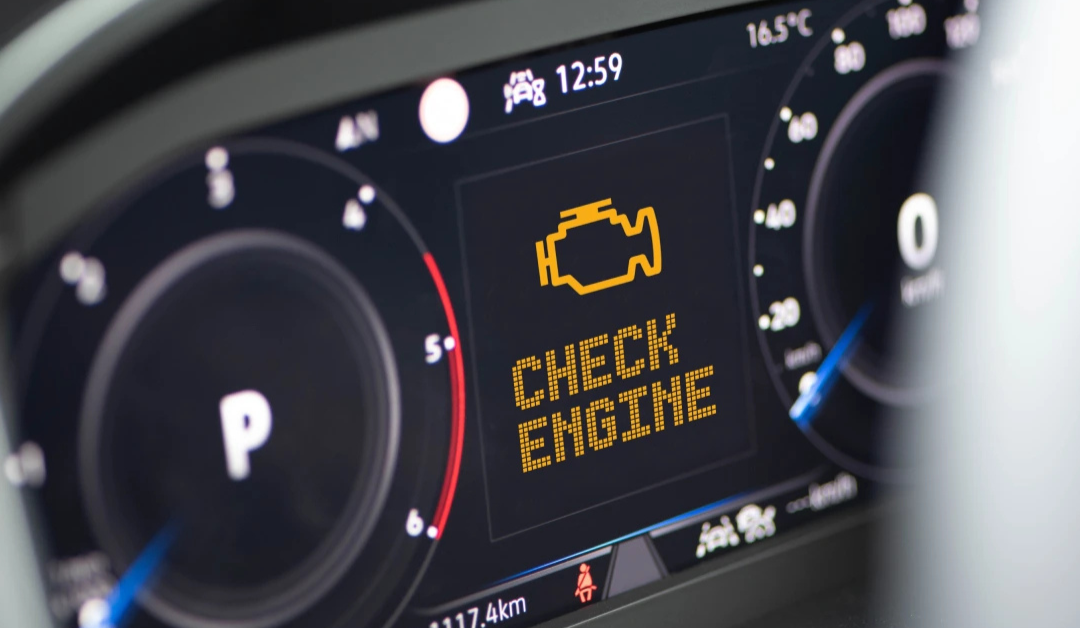
A check engine light has a way of showing up at the least helpful time. The car might still feel normal, or it might be running rough, using more fuel, or hesitating when you press the gas. Either way, the warning leaves the same question hanging: what caused it?
Modern cars track more systems than most drivers realize. The engine computer monitors air, fuel, spark, emissions, temperature, sensors, and electrical signals simultaneously. When something falls outside the expected range, the light comes on and stores a code. That code is useful, but it does not always name the failed part.
Loose Or Leaking Gas Cap
A loose gas cap is one of the simpler reasons a check engine light can turn on. The fuel system is sealed, so fuel vapors stay contained. If the cap is loose, cracked, missing, or not sealing well, the evaporative emissions system may detect a leak.
Tightening the cap may help if that is the only issue, but the light will not always shut off right away. The vehicle may need several drive cycles to retest the system. If the warning stays on, the leak could be from a hose, valve, seal, or fuel system part instead of the cap itself.
Oxygen Sensor Problems
Oxygen sensors measure oxygen levels in the exhaust so the computer can adjust fuel delivery. When a sensor becomes slow, contaminated, or fails, the engine may use too much fuel or run less efficiently. Fuel economy can drop before the driver notices anything else.
An oxygen sensor code should still be tested. The sensor may be bad, but it may also be reporting a real air-fuel problem. Vacuum leaks, exhaust leaks, fuel pressure issues, or wiring problems can all affect oxygen sensor readings. Replacing the sensor without checking the cause can send the same light back to the dashboard.
Catalytic Converter Efficiency Codes
The catalytic converter helps clean up exhaust gases before they leave the tailpipe. If the computer sees that the converter is not working efficiently, it can turn on the check engine light. Drivers may notice poor power, a rotten egg smell, failed emissions testing, or no symptoms at all.
A catalytic converter code can be expensive, so it deserves careful testing. Misfires, oil burning, coolant entering the exhaust, or a rich fuel mixture can damage the converter. If the underlying engine problem is not corrected, a new converter can fail again.
Engine Misfires
A misfire means one or more cylinders are not burning fuel correctly. The car may shake, idle roughly, hesitate, or feel weak during acceleration. If the check engine light flashes, that is more urgent because unburned fuel can overheat the catalytic converter.
Common misfire causes include worn spark plugs, weak ignition coils, fuel injector problems, vacuum leaks, wiring faults, and compression problems. Regular maintenance helps reduce some of these risks, especially when spark plugs and filters are serviced on time. Still, a misfire should be diagnosed by testing the affected cylinder instead of replacing parts at random.
Mass Airflow Sensor Trouble
The mass airflow sensor measures the amount of air entering the engine. The computer uses that reading to decide how much fuel to add. If the sensor is dirty, failing, or receiving bad information due to an intake leak, the engine can run rich, lean, or unevenly.
Symptoms can include hesitation, rough idle, stalling, poor fuel economy, or sluggish acceleration. Sometimes the air filter or intake duct is part of the story. A cracked air tube after the sensor can let unmeasured air into the engine, creating readings that appear to be a sensor problem.
Evaporative Emissions Leaks
The evaporative emissions system keeps fuel vapors from escaping into the air. It uses hoses, valves, a charcoal canister, a fuel tank pressure sensor, and other parts to seal and control vapor flow. Small leaks in this system are a common reason for check engine lights.
These leaks can be tricky because the vehicle may drive perfectly. There may be no smell and no change in performance. A smoke test is often needed to find the leak. Tiny cracks, loose fittings, or a valve that does not seal can all trigger a warning.
Sensor Or Wiring Issues
Modern vehicles rely on sensor data for nearly every engine decision. Coolant temperature, throttle position, camshaft position, crankshaft position, fuel pressure, and many other readings help the computer manage the engine. A bad sensor, loose connector, rubbed wire, or poor ground can all set a code.
Electrical issues can be especially misleading. A part may appear to have failed when the real issue is power, ground, or signal loss. That is why an inspection should include wiring and connector checks when the code or symptom points in that direction.
Why A Diagnostic Is Better Than Clearing The Light
Clearing a check engine light without fixing the cause only erases the warning for a while. If the problem persists, the light will return after the vehicle runs its self-tests again. Worse, clearing codes can erase useful information that helps the technician see when the fault happened.
A proper diagnostic looks at codes, freeze-frame data, live readings, visual clues, fluid condition, and how the vehicle behaves on a road test. The goal is to find the cause, not just the category. That gives you a better repair plan and helps prevent the same light from returning.
Get a Check Engine Light Diagnostc In Lewisville, TX, With Lorentz Automotive
If your check engine light is on, flashing, or coming back after being cleared, Lorentz Automotive in Lewisville, TX, can test the system and explain what is actually causing the warning.
For check engine light diagnostics and repair with clear next steps, contact us to schedule an appointment.